Heritage Leather Boots: Why Craft Still Matters in 2026
As fast fashion dominates closets, the enduring appeal of well-made leather boots reveals what consumers truly value.

A pair of heritage leather boots represents something vanishing from modern wardrobes: deliberate, patient construction.
These aren't throwaway footwear designed for a single season. They're built to outlast trends, to develop character with wear, to become better-looking as they age.
In 2026, when mass production has flattened most clothing categories into identical sameness, heritage boots stand apart—not through marketing alone, but through plainly visible craft.
The Leather Question
Material quality separates heritage boots from their disposable cousins. Full-grain leather—hide left intact with its original surface—develops a natural patina over months and years.
This process fascinates boot owners. Creases deepen. Scuffs burnish. The leather softens where it bends, hardens where it takes pressure.
According to leather research standards, vegetable-tanned hides—a slower, traditional method—age differently than chrome-tanned alternatives. They absorb moisture, darken, and gain suppleness.
Budget boots use thinner leather or corrected-grain hides, both cheaper to mill but incapable of this transformation. A $200 boot looks the same at month one and month twelve.

Construction Methods That Endure
How a boot is sewn determines whether it survives a decade or falls apart in two years. Goodyear welt construction—stitching the upper to an intermediate welt, then the welt to the sole—remains the gold standard.
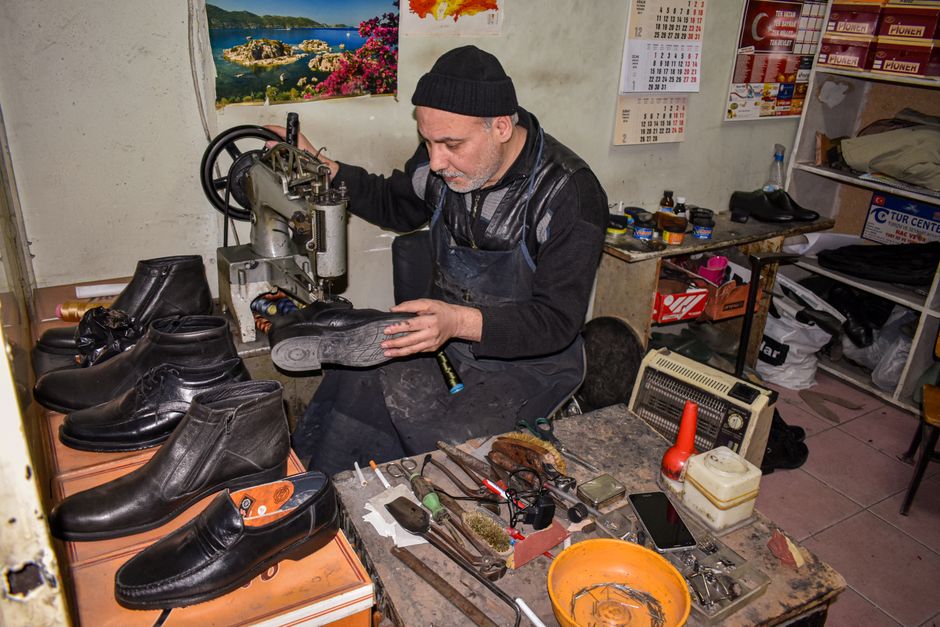
This method is slower and more expensive than the cemented soles used in mass production. But it allows resoling: when the sole wears through, a cobbler can replace just that component, extending the boot's life indefinitely.
The Smithsonian Institution has documented heritage footwear techniques spanning centuries, showing how construction methods haven't fundamentally changed because they work.
Frye Store employs variations of these classical methods, though individual boot lines differ. Some use Goodyear welt; others employ direct-attach methods that are still repairable but less traditional.
What Separates Heritage from Disposable
The Economics of Ownership
A heritage boot costs more upfront—often $300 to $600. That number stops many shoppers immediately.
But the math changes over a decade. A $500 boot resoled twice (roughly $150 per resoling, including labor) costs $800 total across ten years—less than $80 annually.
A $150 disposable boot purchased every eighteen months runs $1,000 across the same span. The heritage boot, despite its higher entry price, is cheaper over time and produces less waste.
This calculation doesn't account for intangibles: the daily ritual of wearing a familiar pair; the knowledge that you own an object shaped to your foot; the refusal to participate in endless replacement cycles.
Heritage boots represent a shift in how consumers think about value—not as lowest price, but as durability, repairability, and the pleasure of owning something that improves with age.
Industry observation, 2026
The Sustainability Angle
Environmental impact matters more to consumers each year. Fast footwear contributes significantly to landfills; boots designed for five years of life versus five months make a measurable difference.
Vegetable tanning, while slower, avoids chrome-tanning's heavy-metal effluent. Heritage bootmakers increasingly publish their tannery standards as a differentiator.
Repairability itself is a form of sustainability. A resoled boot generates no new production waste; it's maintenance, not replacement.
The case for heritage
Heritage leather boots aren't for everyone. They require patience through a break-in period, attention to maintenance, and acceptance that true craftsmanship costs more.
But in 2026, when most wardrobes run on disposability, a pair of well-made boots becomes a small act of resistance—a vote for durability, for craft, for boots that become richer and more personal with time.