How Cotton Moves From Farm to Closet: Supply Chain Breakdown
Understanding the journey of cotton reveals why prices fluctuate and why sustainability matters in apparel.

Cotton sits at the center of global apparel production, yet most consumers never see the machinery behind it.
From soil to shipping container, the cotton supply chain involves farmers, ginners, spinners, weavers, and distributors across dozens of countries.
Understanding this network explains why a simple cotton t-shirt carries complexity—and why disruptions ripple across the industry.
Where Cotton Begins
Cotton cultivation starts with seeds planted in warm climates across India, China, the United States, and Pakistan.
These four nations produce roughly 80 percent of the world's cotton supply, according to Cotton USA.
Farmers irrigate, fertilize, and monitor crops for six to seven months before harvest.
Yields depend heavily on rainfall, pest pressure, and soil quality—factors beyond any single producer's control.

Major Cotton-Producing Nations
The Ginning Stage
After harvest, raw cotton bolls arrive at gin mills where machines separate fibers from seeds and plant debris.
Ginning removes roughly 65 percent of the raw weight, leaving clean lint ready for textile mills.
This mechanical process takes hours and produces ginned cotton bales—the standard trading unit across global markets.
Gin efficiency and fiber quality at this stage directly influence the final yarn strength and fabric appearance.
Key Steps in Cotton Processing
1. Cultivation and Harvest
Farmers plant, irrigate, and monitor cotton for six to seven months until bolls mature.
2. Ginning
Mills separate fiber from seeds and debris, creating standardized bales for trade.
3. Spinning
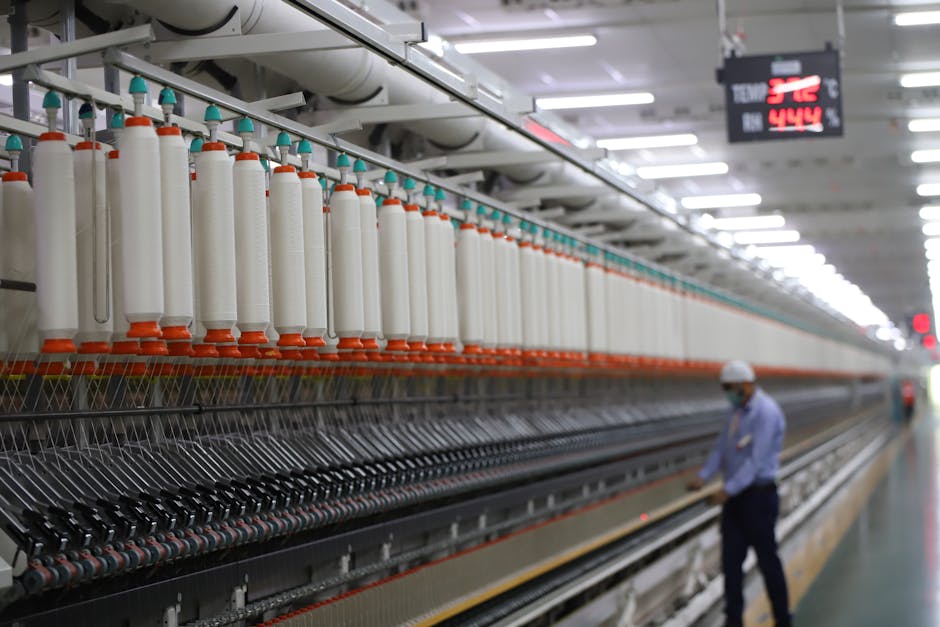
Textile mills card, draw, and twist fibers into yarn of varying weights and thickness.
4. Weaving or Knitting
Yarn becomes fabric on looms or knitting machines, creating the base material for garments.
5. Finishing and Dyeing
Fabric is treated, dyed, and processed to achieve desired color, texture, and performance.
6. Garment Construction and Distribution
Cut-and-sew facilities assemble finished garments, which then move to warehouses and retailers worldwide.
The Asian Textile Hub
Bangladesh, Vietnam, India, and Pakistan have become the world's dominant spinning and weaving centers.
Labor costs, established infrastructure, and proximity to cotton sources drew investment from major apparel brands over decades.
Bangladesh alone employs over four million garment workers and operates thousands of factories that process cotton into finished clothing.
This concentration creates efficiency but also means supply shocks in one country can disrupt global inventory levels.
Price Volatility and Market Drivers
Cotton prices fluctuate based on global supply forecasts, currency movements, and crude-oil costs.
The International Cotton Advisory Committee tracks production and consumption data that influence futures trading.
When drought reduces harvests or geopolitical tension disrupts shipping, prices spike within weeks.
Apparel brands hedge these swings by locking in contracts months ahead, but smaller manufacturers often absorb sudden cost increases.
Most apparel companies can trace cotton to the gin mill but struggle to track individual farmer identity or land-use practices. Third-party certification programs attempt to bridge this gap, yet transparency remains incomplete across the industry.
Sustainability Pressures
Cotton farming accounts for roughly 16 percent of global insecticide use despite occupying only 2.5 percent of cultivated land.
Water consumption is equally significant—producing one kilogram of cotton fiber requires approximately 10,000 liters of water.
These environmental costs drive demand for organic and regenerative cotton, though certified supply remains a fraction of total global output.
Retailers increasingly market sustainable cotton offerings, but sourcing limitations keep prices premium and volumes constrained.
The Complexity Behind Simple Cotton
A cotton t-shirt carries the footprint of dozens of decisions made across continents and months.
Recognizing this chain—from farmer decisions in India to dye houses in Vietnam to distribution centers worldwide—reveals why apparel supply remains fragile and why pricing seems arbitrary.
As climate pressures intensify and consumer scrutiny grows, the cotton supply chain faces pressure to become faster, cheaper, and cleaner simultaneously.
For anyone buying cotton apparel in 2026, that tension shapes every garment that arrives in a store.