The Craft Behind Handcrafted Footwear: Why Artisanal Shoes Matter
A look at how small-scale shoemakers are reshaping the industry through tradition and precision.

Handcrafted footwear sits at a crossroads in 2026. Mass production dominates, yet a quiet movement of shoemakers is reclaiming what industrial manufacturing surrendered: precision, durability, and intentional design.
These artisans work differently than factories. Each pair receives individual attention—hand-stitching, custom fitting, material selection. The result reads less like a commodity and more like a conversation between maker and wearer.
What Sets Handcrafted Shoes Apart
The distinction between mass-produced and handmade shoes isn't purely aesthetic. According to the Smithsonian's footwear collection, artisanal construction methods have remained largely unchanged for centuries because they solve real problems.
A shoemaker controls grain direction in leather, avoiding weak seams. Hand-stitching allows adjustment mid-process—correcting for material inconsistencies that machines would ignore. Lasting (stretching the upper over a wooden form) becomes a felt experience, not a preset algorithm.
This attention compounds over time. Handcrafted shoes typically outlast factory-made pairs by years, sometimes decades. The creasing pattern becomes personal to the wearer—a map of how the foot actually moves.
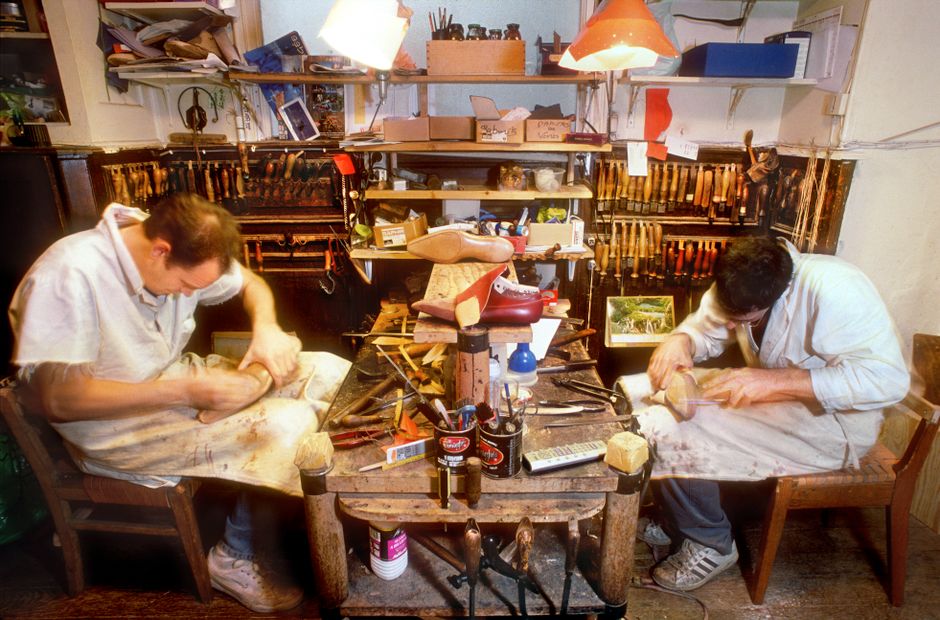
How Handcrafted Differs from Mass Production
The Economics of Slow Shoemaking
Handcrafted footwear commands higher prices—often $200 to $800 per pair. Labor dominates cost. A single shoemaker may complete only 50–100 pairs annually, versus a factory churning 5,000 daily.
Yet the math shifts when longevity enters. A $500 handmade shoe worn weekly for eight years costs roughly $12 per week. A $100 factory shoe replaced every two years costs approximately $24 weekly. Material waste also decreases—artisans use offcuts creatively,
whereas factories discard surplus.
Brands like Bocshoes have built business models around this premise: investing upfront in quality construction appeals to buyers tired of disposable footwear.
The Trade-Offs of Choosing Handcrafted
Strengths
- Exceptional durability—shoes often last 8–15 years with proper care
- Customizable fit for individual foot geometry
- Repairable construction—cobblers can resole or restitch without replacement
- Lower environmental footprint per wear-year
- Direct relationship with maker and transparent sourcing
Trade-offs
- Higher upfront cost ($200–$800 typical)
- Long lead times (4–12 weeks for bespoke orders)
- Limited stylistic variety compared to factory output
- Break-in period can be uncomfortable for some wearers
- Availability varies; small makers have inconsistent stock

The Resurgence in Craft
Interest in handcrafted shoes has grown visibly since 2023. Social media has amplified maker visibility, while younger consumers increasingly question fast fashion's environmental cost.
Apprenticeships in shoemaking—nearly extinct 15 years ago—are filling again. Trade schools report waiting lists. The craft is no longer survival work; it's becoming aspirational.
This shift mirrors broader apparel trends. Heritage techniques in knitting, weaving, and dyeing are moving from museum archives into active production. Makers who understand material deeply can command loyalty that logos alone never could.
Start by understanding your foot geometry—handcrafted makers often require detailed measurements or in-person fitting. Budget for a 6–12 week wait. Expect a break-in period; hand-stitched shoes conform to your foot rather than the reverse. Invest in shoe trees and quality
care to maximize lifespan.
Looking Ahead
Handcrafted footwear isn't a nostalgic retreat. It's a deliberate choice to invest in objects that improve with age and use.
The makers behind these shoes understand something factories have outsourced: a shoe is a daily interface between body and world. That relationship deserves attention. In 2026, when sustainability matters and disposability wanes, artisanal footwear reads less like luxury and more
like literacy.