How cotton moves from field to closet: supply chain essentials
Understanding the journey of raw fiber reveals why costs fluctuate and quality varies across brands.

Cotton dominates global apparel production — roughly 25 million tons are grown annually, yet most shoppers never consider where their t-shirt begins.
The path from soil to finished garment spans continents, involves dozens of intermediaries, and hinges on weather, labor costs, and geopolitical shifts.
Understanding how cotton moves through this system explains price swings, quality gaps, and why transparency matters in fashion.
Where cotton grows and why location matters
India, China, and the United States together account for over 70% of global cotton production, each bringing distinct agronomic and economic conditions.
Growing cotton demands significant water — roughly 10,000 liters per kilogram of fiber. Climate volatility now threatens yields across traditional growing regions.
Pesticide use remains high in cotton agriculture; the FAO reports the crop uses 16% of global insecticides despite occupying only 2.5% of arable land.
Farm-gate prices fluctuate with commodity markets, weather events, and geopolitical trade policies — dynamics that ripple downstream to retailers and consumers.

The five stages of cotton processing
1. Ginning
Cotton seeds are mechanically separated from fiber using large-scale machinery. This step removes roughly 65% of the raw boll's weight.
2. Baling and transport
Cleaned fiber is compressed into 200-kilogram bales for shipping. Most exports move via container ship to spinning mills, often in Asia.
3. Spinning
Raw fiber is carded, combed, and twisted into yarn. Yarn count (thickness) is standardized here — finer yarns command higher prices.
4. Weaving or knitting
Yarn is interlocked into fabric sheets. This stage determines the final texture — jersey, twill, canvas, or denim.
5. Finishing and garment assembly
Fabric is dyed, treated for shrinkage or wrinkle resistance, cut, and sewn into finished products. Most apparel finishing now occurs in low-wage countries.
Cotton supply chain by the numbers
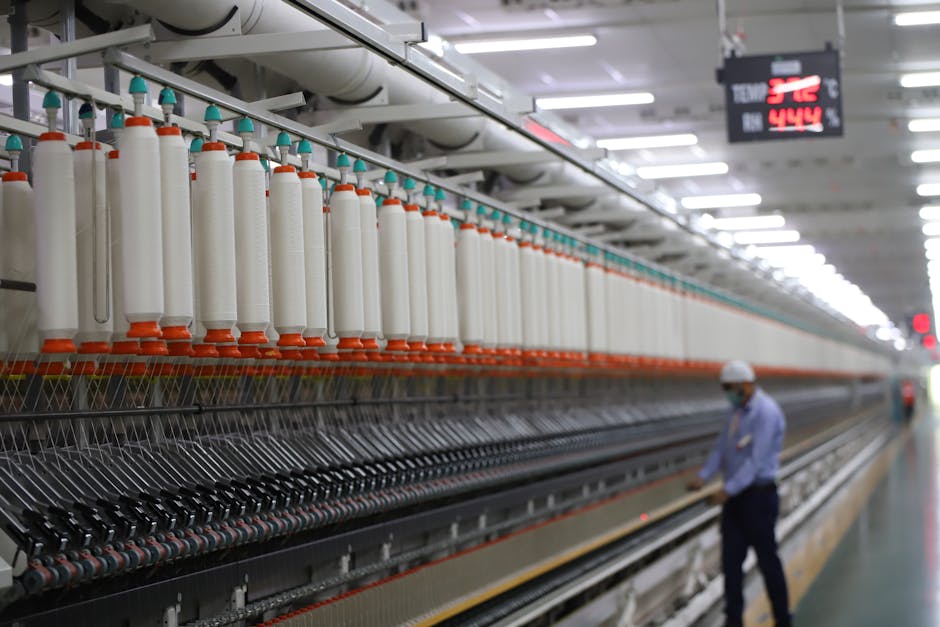
Where costs accumulate and quality diverges
Raw fiber represents only 12–18% of a retail cotton garment's final price. Labor, transport, chemicals, and retail markup claim the rest.
Spinning and weaving mills in different countries operate under vastly different wage and environmental standards, creating quality and ethical variance.
Higher-end brands often source longer-staple cotton (staple length affects softness and durability) and work with specialized mills, driving up production cost per unit.
Speed matters too — fast-fashion turnarounds compress timelines, forcing mills to cut corners on quality checks and shrinkage testing.
Cotton prices are indexed on global commodity exchanges. A single frost in the U.S. growing belt or monsoon failure in India can swing yarn costs 20–30% within weeks, often too quickly for brands to adjust retail pricing.
Transparency pressures and shifting practices in 2026
Retailers increasingly face pressure to disclose supply-chain sourcing, labor conditions, and water use — regulatory mandates in Europe and consumer demand elsewhere are driving change.
Some brands now trace fiber to specific farms, publish water-usage data, and certify mills. Business of Fashion reports that transparency commitments influence procurement decisions.
Regenerative cotton programs and water-efficient farming models are gaining traction but remain marginal — they cost more upfront and require long-term mill partnerships.
Blended fabrics (cotton mixed with synthetics or other naturals) sometimes bypass the heaviest environmental impacts of pure-cotton supply chains, though recycling such blends remains difficult.
The takeaway
Cotton's supply chain is neither simple nor static. Every step — from rain-dependent harvests to wage-driven labor economics — affects what lands in your closet.
Recognizing these layers explains why price varies, why some garments outlast others, and what questions matter when evaluating where your clothes come from.