The Craftsmanship Behind Handcrafted Footwear in 2026
Why artisanal shoemaking is reclaiming its place in a fast-fashion world.

The handcrafted shoe market is experiencing a quiet renaissance. While mass production dominates retail shelves, a growing community of makers—from one-person workshops to small ateliers—is proving that shoes built by hand carry a different kind of value.
This resurgence isn't nostalgia alone. It reflects a fundamental shift in how consumers think about durability, sustainability, and the stories embedded in the objects they wear.
Understanding what drives the handcrafted footwear movement reveals something larger about craftsmanship itself in the modern economy.
The Durability Equation
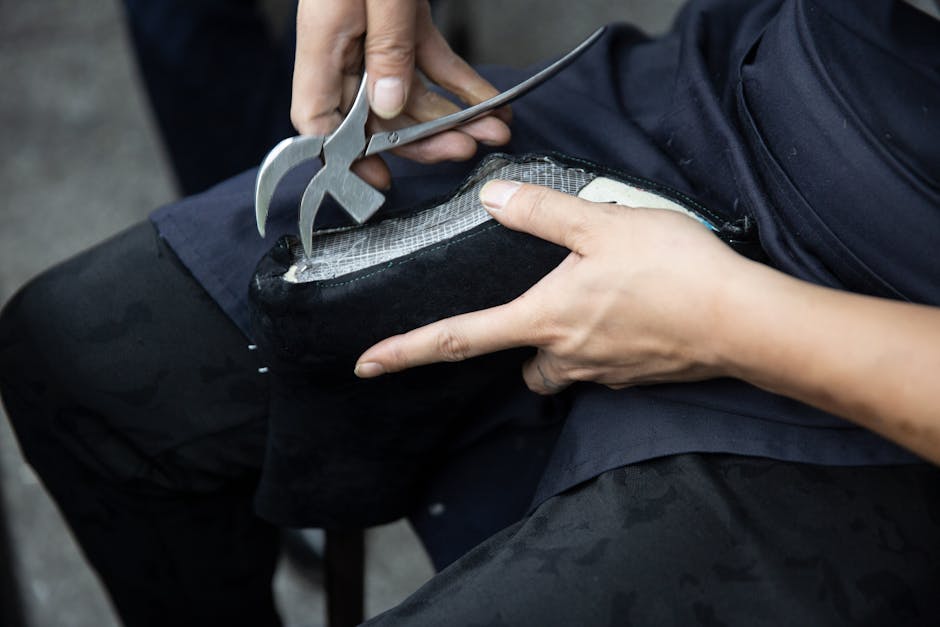
A handcrafted shoe costs more upfront because each pair passes through multiple skilled hands. Stitching, sole attachment, and finishing happen deliberately, not on a conveyor belt.
According to the Smithsonian's footwear collection, longevity has always defined quality footwear—a principle that vanished during the 20th-century shift to industrial production.
Today's handcrafted makers often aim for shoes that last decades, not seasons. This economics makes sense: a pair worn for five years costs less per wear than a fast-fashion equivalent replaced annually.

Five Techniques Defining Handcrafted Shoemaking
1. Goodyear Welt Construction — Premium dress shoes and work boots
A narrow strip (the welt) is stitched between the upper and sole, then the outer sole is attached to the welt. This method allows resoling—the shoe can be rebuilt multiple times.
2. Hand Stitching — Decorative and structural detail work
Visible seams sewn by hand signal intentionality. Each stitch is uniform only because the maker controls the needle, not because a machine enforces consistency.
3. Leather Selection and Conditioning — Foundation of durability
Artisanal makers often source hides based on feel and character, not batch minimums. Raw leather is conditioned over weeks to develop patina and suppleness.
4. Last Customization — Fit and comfort tailoring
The wooden form (last) around which a shoe is shaped can be modified for individual feet. Handcrafted makers often adjust lasts between orders.
5. Edge Finishing — Aesthetics and durability
Hand-painted, sanded, and polished edges prevent fraying and signal craft. Industrial shoes rarely receive this attention.
The Economics of Making and Pricing
Handcrafted footwear occupies a narrow price band: too expensive for impulse buying, too affordable (by artisan standards) for most retail markups.
A maker investing 8–12 hours in a pair faces real constraints on final price. Some operate direct-to-consumer to avoid wholesale middlemen; others work through specialty retailers willing to carry premium goods.
Bocshoes and similar makers have found sustainable models by emphasizing limited production and transparent craftsmanship—letting customers see the labor investment justifies the cost.
The Trade-Offs of Handcrafted Footwear
Strengths
- Resole-ability extends shoe lifespan to 10+ years of active wear.
- Leather matures and develops character; the shoe improves with age.
- Custom fitting or bespoke options available directly from makers.
- Transparent supply chains: makers know tanneries, materials, and labor sources.
- Limited production means less environmental footprint per pair.
Trade-offs
- Higher initial cost (typically $250–$800+ per pair).
- Slower delivery; custom orders may take weeks or months.
- Break-in period can be uncomfortable compared to pre-softened industrial shoes.
- Limited color and size availability from smaller makers.
- Repair and maintenance knowledge required; not all cobblers can service custom work.
The Sustainability Angle—Simplified
Sustainability claims about handcrafted goods often exaggerate. A hand-stitched shoe uses as much leather as a machine-stitched one; traditional processes aren't automatically lower-impact.
The real advantage is longevity. A shoe worn for 15 years generates less waste per wear than one discarded after 2 years of fashion relevance.
Some handcrafted makers are exploring vegetable-tanned leather and low-water dyes, but these choices depend on individual makers, not the category itself. The tanning process itself—whether chromium or vegetable—defines environmental impact more than production method.
Ask makers about break-in time, sole construction, and resoling cost before ordering. A transparent maker will answer; opacity is a red flag.
Looking Ahead
Handcrafted footwear remains a niche within apparel—a choice driven by values, not necessity. The category isn't poised to replace industrial production.
What's shifting is visibility. In 2026, the internet connects makers directly to customers who prioritize durability and craft. The movement thrives not because handmaking is inherently superior, but because some consumers have decided that owning fewer, better things matters more
than following seasonal trends.
For those considering the investment, the question isn't whether handcrafted shoes are worth it in the abstract. It's whether the specific pair, maker, and aesthetic align with how you actually live and dress.